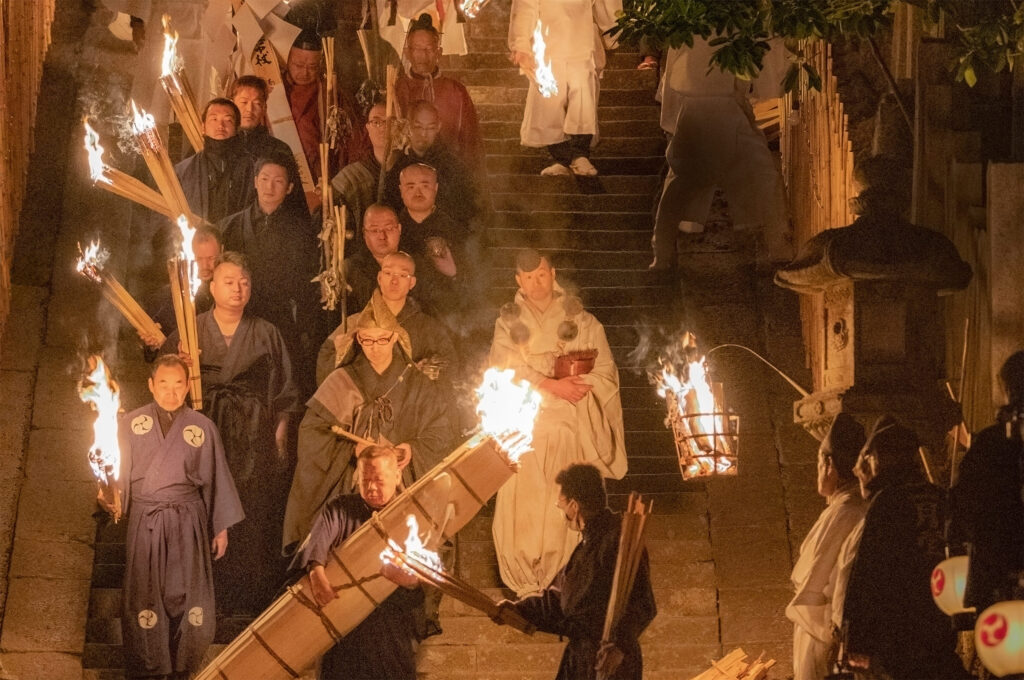
Shuni-e is a Buddhist rite of repentance traditionally held in the second month of the Chinese lunisolar calendar. At Tōdaiji, it now takes place during the first two weeks of March and involves several ceremonies and rituals. The ritsual draws crowds of spectators and is considered a herald of spring.
The focus of the Shuni-e is the Jūichimen Kannon (Eleven-Headed Kannon), a compassionate deity devoted to easing human suffering. Two statues of this deity are enshrined in the Nigatsudō: Ōkannon and Kogannon. They are both absolute hibutsu, or hidden buddhas, which no one is allowed to see. During the Shuni-e, 11 selected Tōdaiji and other branch monks and pray and perform rituals to the Jūichimen Kannon to cleanse the sins of humanity and to cure such illnesses, to gain a fruitful harvest of the Five Crops, and to achieve peace under heaven, in other words to guarantee the welfare of the people. The rituals are performed six times a day, from evening until after midnight.
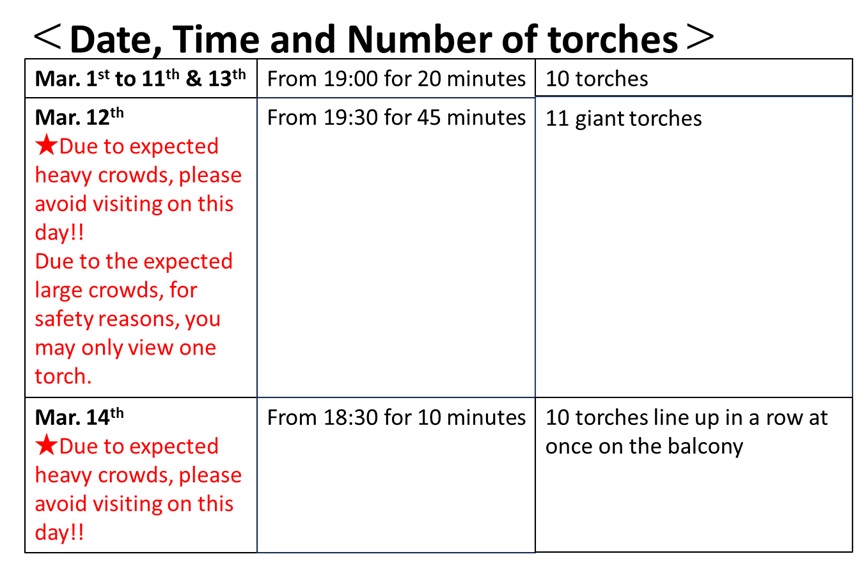
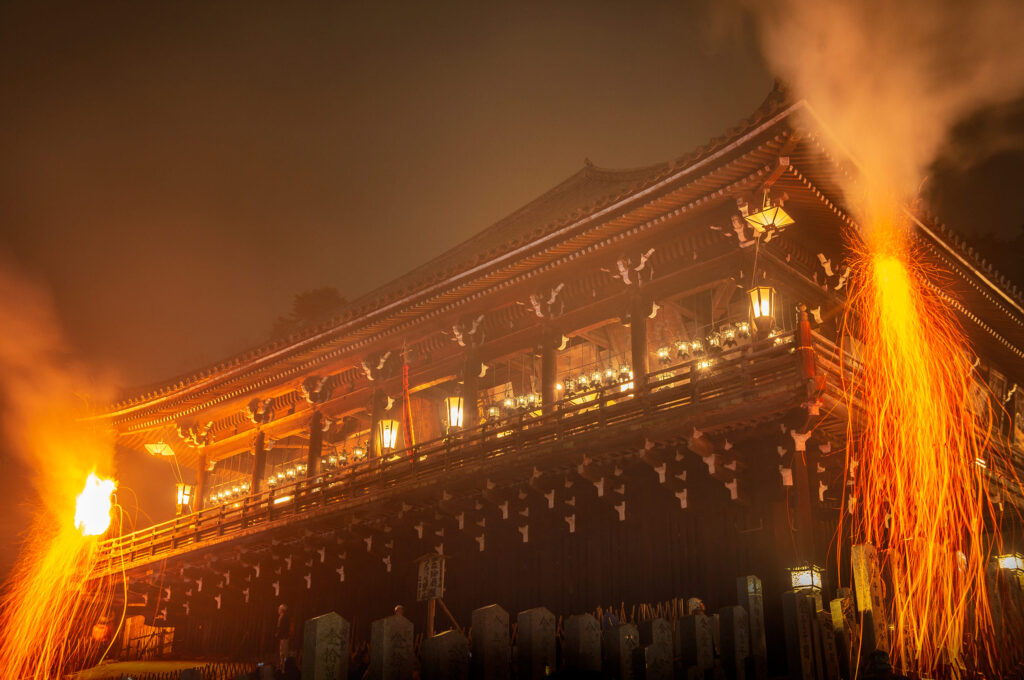
Every night over the two weeks from March 1st to 14th during Shuni-e, huge torches are waved from the balcony of the Nigatsudō. On dark nights, torchbearers one by one guide the monks between their Shelter of Reclusion and the Nigatsudō.
Every night over the two weeks from March 1st to 14th druing Shuni-e, huge torches are waved from the balcony of the Nigatsudō. On dark nights, torchbearers one by one guide the monks between their dormitory and the Nigatsudō.
On the middle of the night at around 1:30AM on Mar. 13th, an important ritual known as Omizutori, or “water-drawing,” in which the monks take water from a well and offer it to the Jūichimen Kannon. According to legend, thousands of gods had been invited to the first Shuni-e ceremony, but one of gods call Onyū Myōjin was late—he’d been fishing and lost track of time. The well was his way of apologizing: its water, the story goes, sent from Wakasa (Present Fukui Prefecture) where Onyū Myōjin was through groundwater, to a fountain (a place in the present well) in front of Nigatsudō.